Live coverage
Army pulls 350 from Upper Trishuli tunnel, more still inside
Revised
This briefing was updated after publication as newer figures were confirmed. The time above is the time of the bulletin it is built on.
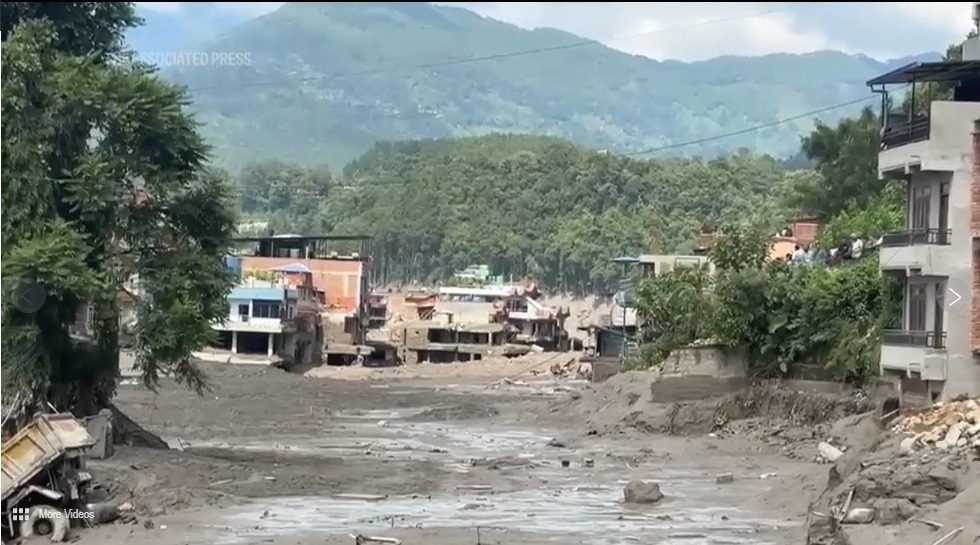
The Nepali Army has pulled more than 350 workers and local villagers out of a flooded access tunnel at the under construction Upper Trishuli-1 hydropower project, rescuers rappelling from a hovering helicopter to reach the entrance, Bloomberg reports, citing Nepal's Prime Minister's Office. More than 100 people were still believed trapped inside as of Thursday, and the operation is continuing.
The Nepali Army said separately that its units have rescued more than 300 people across the flood zone so far, spokesperson Brigadier General Raja Ram Basnet said, a wider tally than NDRRMA's earlier, named count of 113. It is not confirmed how these counts relate to each other. Around two dozen helicopters and nearly 1,000 personnel from the Nepal Police, Nepali Army and Armed Police Force are working the search, the Kathmandu Post reports.
At Trishuli 3A in Mailung, where 35 workers were reported cut off on Wednesday with the tunnel gate blocked, the army airlifted three people out on Thursday, Onlinekhabar reports. It has not said how many remain inside.
At the Langtang Hydropower project, more than 25 workers have been out of contact in a tunnel since Wednesday. Bijay Mohan Bhattarai, the company's managing director and a secretary of IPPAN, said government agencies need to step up rescue efforts there, and that all available helicopters had already been sent elsewhere, Onlinekhabar reports.
The Independent Power Producers' Association Nepal, IPPAN, says 215 staff from five hydropower projects in total have not been reached since Wednesday's flood. Worst hit is Upper Trishuli-1 itself, with 94 people out of contact by IPPAN's count, a narrower figure than the more than 350 the army says it has now brought out of that project's tunnel. At Rasuwagadhi, 51 staff are out of contact, though 3 reached higher ground on their own.
Sources for this briefing
Written and checked by hand against the sources above. Figures are attributed to the bulletin they came from; where two sources disagreed, the lower confirmed figure was used. If something here is wrong, tell us and it gets corrected or removed.