About this project
An independent volunteer briefing on disasters in Nepal. No official status, no money collected, every figure traceable to a named source.
What this is
Nepal Disaster Update Live is an independent volunteer project. It collects public information about disasters in Nepal: official bulletins, live news, maps, emergency contacts. It puts that on one page that loads fast on a phone.
It exists because during the first days of an emergency the information that matters is scattered: a police bulletin on one site, a situation report as a PDF on another, a helpline number buried three clicks into a ministry page, and a hundred news stories repeating each other. Someone looking for a relative should not have to assemble that themselves.
What this is not
- Not a government site. It has no official status and no government affiliation. Where this site and an official source disagree, the official source is right.
- Not a news agency. There are no reporters on the ground. Everything here traces back to a source that is named and linked.
- Not a charity, and not a payment channel. No money is collected here. Every giving link points at the Government of Nepal’s own relief fund.
- Not affiliated with any NGO, agency or newsroom. Sources are read publicly, the same way anyone can read them.
How the information is put together
Figures
Casualty, damage and rescue figures are typed in by hand from published bulletins, mainly the Nepal Police daily bulletin and NDRRMA situation reports. Each figure carries the source and the time of the bulletin it came from, because a casualty count without a timestamp is not usable during an event. Where two sources disagree, the lower confirmed figure is shown.
The live newswire
The feed on the live updates page is collected automatically by this site’s own server from UN disaster alerts (ReliefWeb, GDACS), the US Geological Survey, and a fixed list of named newsrooms in Nepal and abroad. It is a headline-and-link list: stories are read at the source, not copied here. An item is marked verified only when it comes from an official alerting source, or when two or more independent newsrooms report the same thing.
Written briefings
The dated briefings in the update archive are written by a person from named sources, with the source list printed under each one. They are not model-generated news.
Maps
Map points come from published reporting and satellite imagery and are marked approximate where they are approximate. Basemaps are credited to their providers on the sources page.
What is deliberately not published
- Names of the dead or missing. Circulating unverified names exposes families to fraud and to attention they did not ask for, and competes with the official register rescue teams work from.
- Unverified casualty figures. If it is not in a bulletin, it is not a number on this site.
- Photographs of the dead.
- Donation links other than the government fund, because no other channel can be checked against an official published source.
Corrections
Errors get corrected or removed, not quietly edited around. If a figure, a date, a name or a source here is wrong, write to [email protected] and say what is wrong and, if you can, what the correct source is. The contact page explains what to include.
Beyond this event
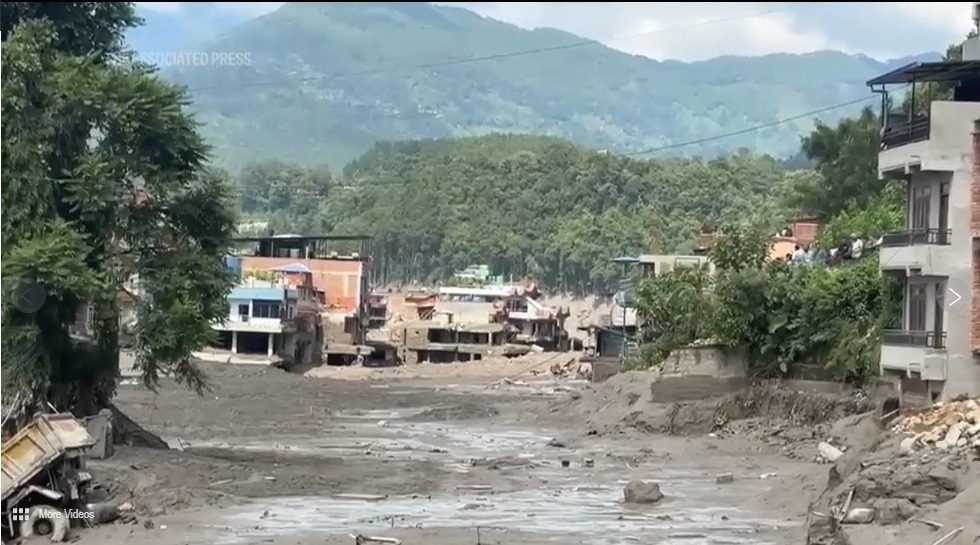
The current story is the 2026 Rasuwa flood. The site is built to cover whatever the next major event in Nepal is, be that an earthquake, a landslide or another flood, without deleting what came before. Past events stay online as archived pages with the "archived" label rather than continuing to present themselves as live. The hazard guide is deliberately event-independent, because helplines and safety advice do not change between disasters.
Technology and privacy
The site is a static page served from Cloudflare’s edge network, with a small server-side layer that fetches public feeds so your browser does not have to. There are no advertising trackers and no third-party analytics scripts collecting your browsing across other sites. Map tiles are loaded from Esri, OpenTopoMap and OpenStreetMap, and embedded videos are served by YouTube, so those providers see the requests their own content needs.