Nepal Disaster Update Live coverage

Nepal’s natural disasters, explained simply

Five hazards, the warning signs for each, and what to do. Written for someone reading it before an emergency, and usable during one.

Nepal sits where two continents collide, under monsoon rain and below melting ice. Five hazards come out of that. Which one you are facing changes what you should do, and doing the wrong one is how people die in an event they could have survived.

Glacial lake outburst flood (GLOF)

A meltwater lake high in the mountains breaks through the loose rock and ice holding it back, and empties down the valley at once.

Warning signs

The river suddenly rises, or suddenly stops, on a day with no rain. A roar from upstream. Water turning grey or brown.

What to do

Go uphill and away from the river immediately. Not along the road. Roads follow rivers. You may have minutes, not hours.

Nepal’s exposure

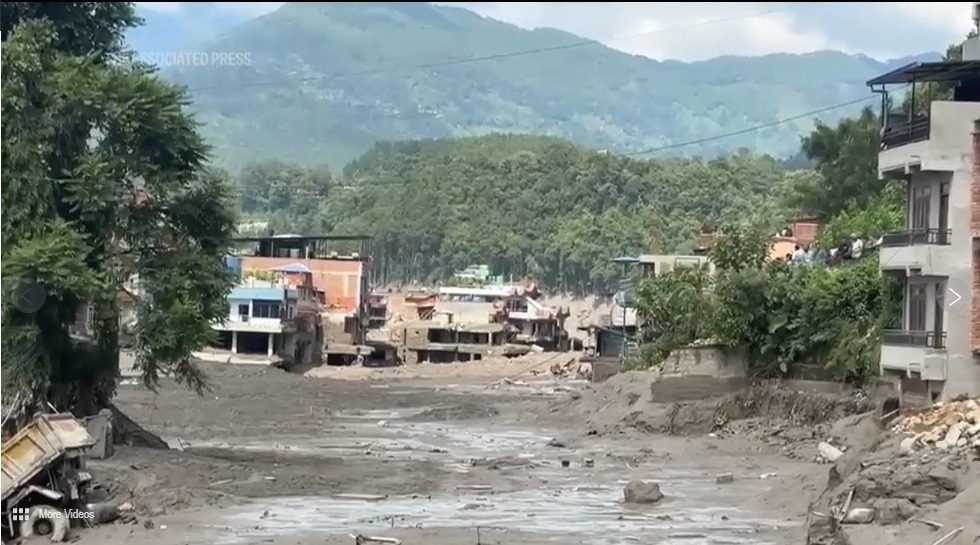
More than 20 glacial lakes in Nepal are classified as potentially dangerous, and many more sit across the border in Tibet where Nepal has no monitoring. This is the hazard behind the 2026 Rasuwa flood.

Earthquakes

India is pushing under Asia at about 2 cm a year. That strain releases as earthquakes. The 2015 Gorkha earthquake killed nearly 9,000 people.

Warning signs

There is no reliable warning. Treat any shaking as the real thing from the first second.

What to do

Drop, cover, hold on. Get under a sturdy table, away from windows. Do not run outside mid-shake. Falling masonry is the main killer.

Nepal’s exposure

Expect aftershocks for weeks. Avoid damaged buildings, steep slopes and riverbanks afterwards; a quake loosens both.

Landslides and debris flows

Steep slopes, heavy rain and cut roads together cause a large share of Nepal’s monsoon deaths every year, usually at night and usually with no warning.

Warning signs

New cracks in the ground or in walls. Doors and windows suddenly sticking. Tilting trees or poles. A rumbling that grows.

What to do

Move sideways off the slope path, not straight downhill. If you are indoors on a slope at night in heavy rain, sleep on the uphill side of the house.

Nepal’s exposure

Road-cutting on steep terrain has made this worse in many districts, because the cut face is the first thing to fail.

Monsoon river floods

June to September brings most of Nepal’s yearly rain. In the Tarai plains rivers spread out slowly over days; in the hills they rise in hours.

Warning signs

Rising, browning water and rain that does not stop. River gauge readings are published live on the BIPAD portal.

What to do

Never walk or drive into moving water. Thirty centimetres will float a car; fifteen will knock an adult over. Turn around.

Nepal’s exposure

The Koshi, Karnali, Narayani, Bagmati and West Rapti basins flood most years, and cross-border embankments change where the water goes.

Fire, lightning and cold waves

Less talked about, still deadly. Lightning kills around 100 people a year in Nepal. Dry-season fires spread fast through village housing, and winter cold waves hit the Tarai hardest.

Warning signs

For lightning: thunder within 30 seconds of the flash means the storm is close enough to strike you.

What to do

Go inside and stay inside for 30 minutes after the last thunder. Not under a lone tree. For fire, know two ways out of a village lane, not one.

Nepal’s exposure

These hazards kill steadily rather than in single large events, so they attract less attention and less preparation.

If you live near a mountain river

01

Know a route uphill, not along the road. Roads follow rivers, and they flood first.

02

Loud river noise, or water rising with no rain, is the warning. Move first, ask questions later.

03

Keep ID, cash, medicines and a torch in one bag you can grab in the dark.

04

Pick a family meeting spot above the flood line. Phones stop working first.

05

If you run a shop or homestay by the river, plan to lose the ground floor. Know what is load-bearing.

06

Save the national emergency numbers into your phone now, not during the emergency.

The warning-time problem

A burst lake can reach a village in under an hour. Some Nepali lakes now have sensors and sirens. Most, especially those across the border in Tibet, do not, so the first warning is often the sound of the river itself. In the 2026 Rasuwa flood, most of the river gauges that did exist downstream were destroyed by the first wave, cutting warning time for anything that followed.

Why it is getting worse

Himalayan ice is melting faster than it is replaced. More meltwater means more and bigger lakes held back by weaker walls, in valleys where more people now live and build than a generation ago. The hazard is growing at the same time as the exposure.

Current events on this site

Learn from the people who study this