Nepal Disaster Update Live coverage

Live coverage

Floods in Nepal

Live coverage of the flood happening now, plus why Nepal’s rivers behave the way they do and what to do when one rises. Every figure is attributed to the bulletin it came from.

In danger right now?

Call 100 (Nepal Police) or 112 from any mobile. Do not wait for anything on this page to load.

Full list of Nepal emergency numbers, and what each one is for

The flood happening now: Rasuwa, August 2026

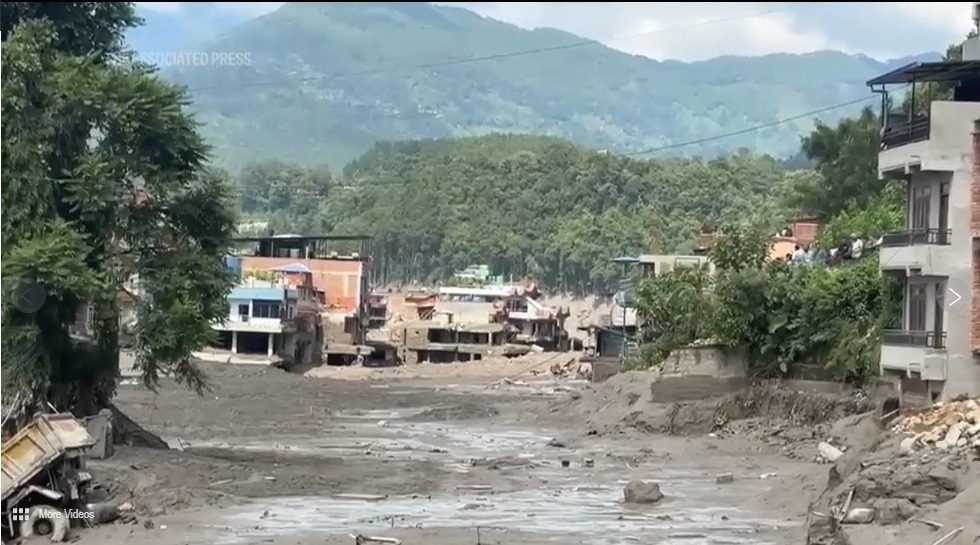
On the morning of 26 August 2026 a flash flood came down the Bhote Koshi from the Tibet side of the border into Rasuwa district. The border towns of Timure and Syabrubesi were hit hardest, and the water carried on down the Trishuli and into the Narayani. Bodies have since been recovered as far south as Chitwan, where more than a third of the confirmed dead were found.

289confirmed dead in NepalNepal Police, 27 August 2026, 2:30 pm NPT
826listed missing in NepalNepal Police, 27 August 2026, 8:15 am NPT
558missing on the China sideCCTV, Gyirong Port
73injuredNDRRMA and Nepal Police
113rescued so farNDRRMA, 27 Aug
14hydropower projects damaged, about 748 MWNepal Electricity Authority
Rs 200 billionroad and bridge damage, preliminaryMinister Sunil Lamsal, 26 Aug
Rs 1 billionrelief money releasedGovernment of Nepal

Read the two headline numbers against their own clocks. The death toll is from the Nepal Police bulletin of 27 August 2026, 2:30 pm NPT. The missing figure is from the earlier police bulletin of 27 August 2026, 8:15 am NPT. The newest bulletin gives a death toll and no missing count, so some of the 826 have since been confirmed among the dead. Damage and rescue figures come from the UN OCHA situation overview, 27 August. Every count here is provisional and moves in both directions.

Read the full Rasuwa flood briefing: what happened, what caused it, who is missing, and what is still unknown.

A second flood is still possible: a new lake has formed upstream

China’s Ministry of Water Resources reports that a barrier lake, a river blocked by debris into an artificial lake, has formed near the confluence of the Chhochen Khola and the Purepu Tsangpo, inside Tibet close to the Nepal border. Chinese state media put the volume behind it at around 2 million cubic metres by the morning of 27 August, and warn it could break.

Both rivers are upper tributaries of the Trishuli system, so a release would run down the same corridor the 26 August flood took. Most river gauges on the Bhote Koshi and Trishuli were destroyed in the first wave, so a warning would come with less notice than normal.

Keep off the banks of the Bhote Koshi, the Trishuli and the Narayani until officials say it is clear. Downstream in India, authorities in Bihar have opened the Valmikinagar Barrage on the Gandak as a precaution and prepared to move 10,000 to 12,000 people.

Source: China’s Ministry of Water Resources, reported by CCTV and Global Times, reported 27 August 2026.

Everything on this event, page by page

Why floods in Nepal are so dangerous so fast

Nepal falls from over 8,000 metres to under 100 metres in about 200 kilometres. Rivers in the hill districts drop steeply and move fast, so a release upstream reaches villages downstream in under an hour rather than over days. In the Rasuwa case, the river drops about 3,000 metres in under 40 km, one of the steepest runs in the Himalaya.

Three things make it worse than the raw geography suggests:

  • Roads follow rivers. The escape route and the flood path are frequently the same line on the map. Moving uphill away from the road is the correct instinct, and the opposite of what people usually do.
  • Warning infrastructure is thin, and it is destroyed first. Most river gauges on the Bhote Koshi and Trishuli were wiped out by the first wave of the 2026 flood, which reduced warning time for anything that followed. The road that carried rescue teams in, the 42 km from Betrawati to the border, was destroyed at multiple points in the same hour.
  • Some headwaters sit in another country. The catchment above Rasuwagadhi is inside Tibet. Nepal has no monitoring station there, so the first sign of a problem can be the river itself.

The two kinds of flood Nepal gets

Monsoon river flooding

June to September. Builds over hours or days, tracks the rain, and is at least partly forecastable. Worst in the Tarai plains, where water spreads wide and stays for days.

Sudden-release floods (GLOF and landslide dams)

Can happen on a clear day with no rain. A lake or a debris dam high in the mountains fails, and the whole volume leaves at once. Almost no warning. This is what hit Rasuwa in 2026.

Telling them apart matters, because the advice differs. Rain flooding gives you time to move belongings and livestock. A sudden-release flood gives you time to move yourself, and only if you start immediately.

Read the full guide to Nepal’s natural hazards: floods, earthquakes, landslides, lightning and cold waves, with the warning signs and what to do for each.

Common questions

Is there a flood in Nepal right now?

Yes. A flash flood struck Rasuwa district on 26 August 2026 and ran downstream along the Trishuli and Narayani rivers. As of 27 August 2026, 2:30 pm NPT, Nepal Police confirm 289 dead; 826 people were listed missing in the earlier bulletin that morning. Officials warn a second surge is possible because a new barrier lake has formed upstream inside Tibet. Full coverage of the Rasuwa flood.

Which rivers in Nepal flood most often?

In the Tarai, the Koshi, Karnali, Narayani, Bagmati and West Rapti spread over their banks most monsoon seasons. In the hills, steep tributaries such as the Bhote Koshi and Trishuli rise in hours rather than days, which leaves far less warning time. The 2026 Rasuwa flood came down the Bhote Koshi.

When is Nepal’s flood season?

The monsoon runs roughly June to September and brings most of Nepal’s yearly rain, so that is when river flooding peaks. Glacial lake outburst floods are different: they can happen on a clear, dry day, which is exactly what happened in Rasuwa in August 2026.

What should I do if a river rises with no rain?

Treat it as an emergency and move uphill away from the river immediately, not along the road. Roads follow river valleys and flood first. A river that rises or suddenly stops on a dry day is the classic sign of a burst blockage upstream. You may have minutes.