Archived event
Researcher says an ice-rock fall off Langtang Lirung, not a lake burst, may have caused the flood
This briefing has been overtaken
It was published at 28 August 2026, 8:00 pm NPT and is kept online as the record of what was confirmed at that hour. Figures in it are no longer current.
Read the latest briefing: India's foreign ministry says 320 of its nationals still uncontactable · Current event summary
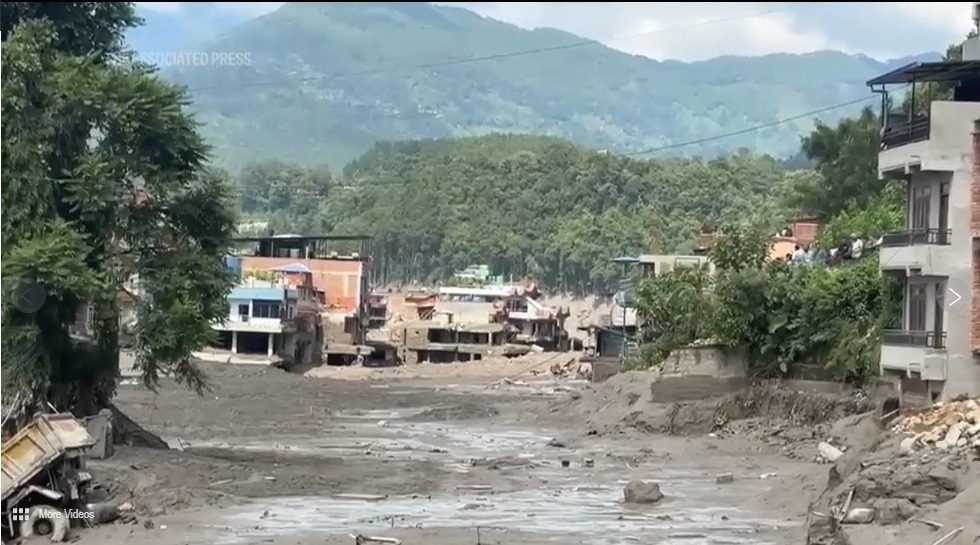
Santosh Nepal, a water resources and climate change researcher, told Onlinekhabar on Friday that the flood may have started with a huge ice and rock fall off Langtang Lirung rather than a glacial lake bursting, which was the earlier working theory.
He said satellite images show a mass of ice, snow and rock falling from about 5,000 to 5,500 metres on the mountain's northern slope and dropping nearly 2,000 metres into the Lhende Khola. The impact could have released enough energy to melt snow and ice fast enough to send a sudden surge of water downstream, without a lake first forming and bursting.
Nepal said the mechanism looks similar to Uttarakhand's 2021 Chamoli disaster, and that it is too early to conclude what happened. He said researchers still need more satellite data and a field investigation once conditions allow.
This is one researcher's preliminary reading, not a finding from the government or ICIMOD, and the cause of the flood is still not officially confirmed.
Sources for this briefing
Written and checked by hand against the sources above. Figures are attributed to the bulletin they came from; where two sources disagreed, the lower confirmed figure was used. If something here is wrong, tell us and it gets corrected or removed.