Nepal Disaster Update Live coverage

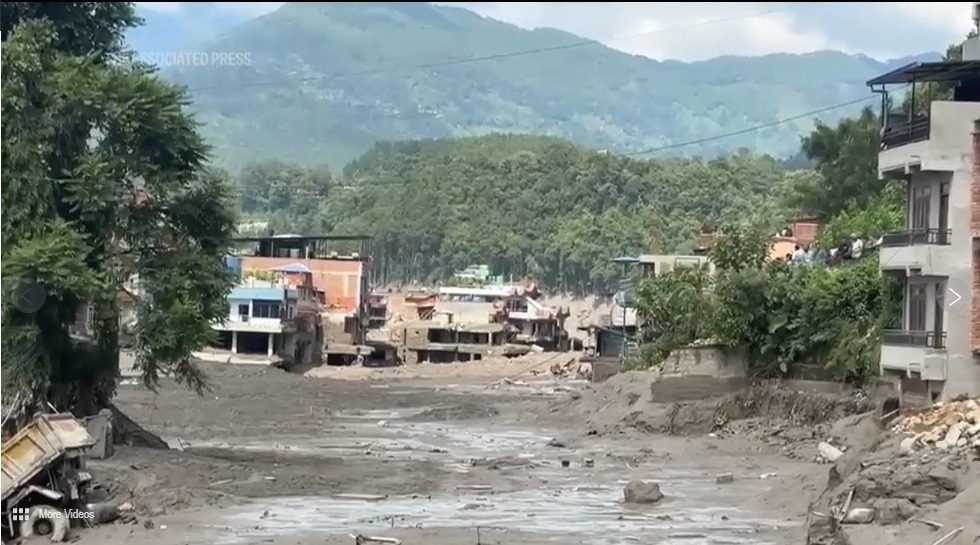
Monsoon river floods in Nepal

The predictable disaster. It happens every year, in roughly the same places, and still kills people who drove into it.

Between June and September Nepal gets around eighty per cent of its annual rainfall. Rivers that are shallow and clear in April run brown, wide and fast, and they do it every year.

Two different floods share the name. In the hills, rain falls on steep ground and reaches the river in hours, so a hill river rises fast, does its damage and drops again within a day. In the Tarai plains the same water arrives slowly, spreads out over a wide flat landscape, and can sit on farmland and in villages for days. Preparing for one is not preparing for the other.

The basins that flood most years are the Koshi, the Karnali, the Narayani, the Bagmati and the West Rapti. Embankments, barrages and road embankments on both sides of the border change where the water goes rather than removing it, which is why a village that never used to flood sometimes starts to.

Nepal does publish live river levels. The BIPAD portal run by the National Disaster Risk Reduction and Management Authority carries gauge readings and warning levels, and the Department of Hydrology and Meteorology issues forecasts and bulletins. Both are worth knowing about before the water is at the door.

Warning signs

01

Rain that has continued for many hours rather than heavy rain for a short time.

02

The river browning and rising, and carrying wood.

03

A gauge reading crossing its warning level on the BIPAD portal for your river.

04

Water backing up in drains and coming up rather than going down.

What to do

01

Never walk or drive into moving water. Thirty centimetres will float most cars. Fifteen will take an adult off their feet. Turn around.

02

Move to higher ground early rather than well, and take documents, medicine, a phone charger and drinking water.

03

Assume flood water is contaminated. Sewage, fuel and animal waste are in it.

04

Keep out of flooded buildings until the power is confirmed off.

05

After the water drops, boil or treat drinking water until the supply is declared safe.

Where Nepal stands

The Koshi, Karnali, Narayani, Bagmati and West Rapti basins flood most years, and cross-border embankments change where the water goes.

Common questions

When is Nepal’s monsoon?

Roughly mid-June to late September, with the heaviest and most damaging rain usually in July and August.

Where can I see live river levels in Nepal?

The BIPAD portal at bipad.gov.np carries gauge readings and warning levels, and the Department of Hydrology and Meteorology at dhm.gov.np publishes forecasts and flood bulletins.

Is a monsoon flood the same as a glacial lake outburst flood?

No. A monsoon flood builds over hours or days from rain you can see. A glacial flood arrives without rain and much faster, and carries far more rock and debris. The safe response to both is the same: get high, early.

Emergency numbers

Police 100. Ambulance 102. Nepal's disaster hotline 1149. The full list, including district control rooms and embassies, is worth saving before you need it.

The other four hazards